


The collagen conversation is missing something important
Every wellness feed right now is full of collagen. Powders in your morning coffee, gummies before bed, peptides in your post-workout shake. If you've been trying to figure out whether any of it is actually worth it, you're asking the right question — and you deserve a straight answer instead of another round of before-and-after photos.
The short version: collagen does have genuine, evidence-supported benefits for women. But there's a gap in almost every guide you'll find, and it matters if you're taking collagen specifically to sleep better, recover faster, or feel less worn down. That gap is muscle tension — and collagen can't touch it.
What collagen actually does in the body
Collagen is the most abundant protein in the human body. It's the structural scaffolding for skin, tendons, ligaments, cartilage, and bone. Starting in your mid-twenties, your body's natural collagen production begins to slow — gradually at first, then more noticeably over time. That decline is part of why joints feel less forgiving and skin loses some of its firmness as you age.
Supplementing with collagen peptides (hydrolyzed collagen that's been broken down for easier absorption) has been studied with reasonable rigor. Here's where the evidence is genuinely encouraging:
- Skin elasticity and hydration. Several randomized controlled trials have found that daily collagen peptide supplementation can improve skin elasticity and hydration in women, particularly those over 35. The effect isn't dramatic, but it's measurable and consistent across multiple studies.
- Joint comfort and mobility. Research published on PubMed suggests collagen supplementation may reduce joint discomfort and support cartilage health, particularly in the knees. Athletes and active women tend to see the most noticeable benefit here.
- Connective tissue support. Collagen provides the building blocks for tendons and ligaments. Some evidence suggests it may help with recovery from repetitive strain and support overall connective tissue integrity when combined with exercise.
- Bone density. Early research indicates collagen peptides may support bone mineral density, which becomes increasingly relevant for women post-menopause.
None of this is hype. These are areas where the research is reasonably solid, even if the effect sizes vary and more long-term studies are still needed.
Where collagen gets oversold
The problem isn't that collagen doesn't work. It's that marketing has stretched its benefits well beyond what the evidence supports — and that gap leads women to expect things collagen simply isn't designed to deliver.
Collagen will not give you dramatically fuller hair by next month. It won't eliminate deep-set wrinkles. And it won't resolve the aching tightness you carry in your neck, shoulders, and upper back — the kind that's there when you wake up and still there when you go to bed.
That last one is the piece almost no guide mentions. And it's the one that matters most if you're taking collagen hoping to sleep better and feel more restored.
The tension problem collagen can't solve
Chronic muscle tension in the neck, shoulders, and upper back is one of the most common physical complaints among women — and one of the most underestimated. It builds quietly: hours at a desk, stress that never fully unwinds, sleeping in a position that doesn't support the cervical spine. Over time, that tension becomes the default state.
Here's why this matters for your recovery and sleep: tight muscles restrict circulation, keep your nervous system in a low-grade alert state, and make it genuinely harder to reach the deep, restorative sleep your body needs to repair itself. Collagen supports the raw materials your body uses to rebuild tissue. But if your muscles are locked up and your sleep is fragmented, that rebuilding process is working against a headwind every night.
Collagen is a supplement. It works at the cellular and structural level. It has no mechanism for releasing the physical tension held in your soft tissue — that requires something that actually reaches the muscle: heat, herbal therapy, or targeted pressure.
How to address the tension piece directly
Warmth is one of the most effective, well-established tools for muscle tension relief. Heat increases circulation to the area, helps soft tissue relax, and signals the nervous system to downshift. When that warmth is delivered consistently and gently — rather than through a heating pad that cycles on and off — it gives tight muscles the sustained input they need to actually let go.
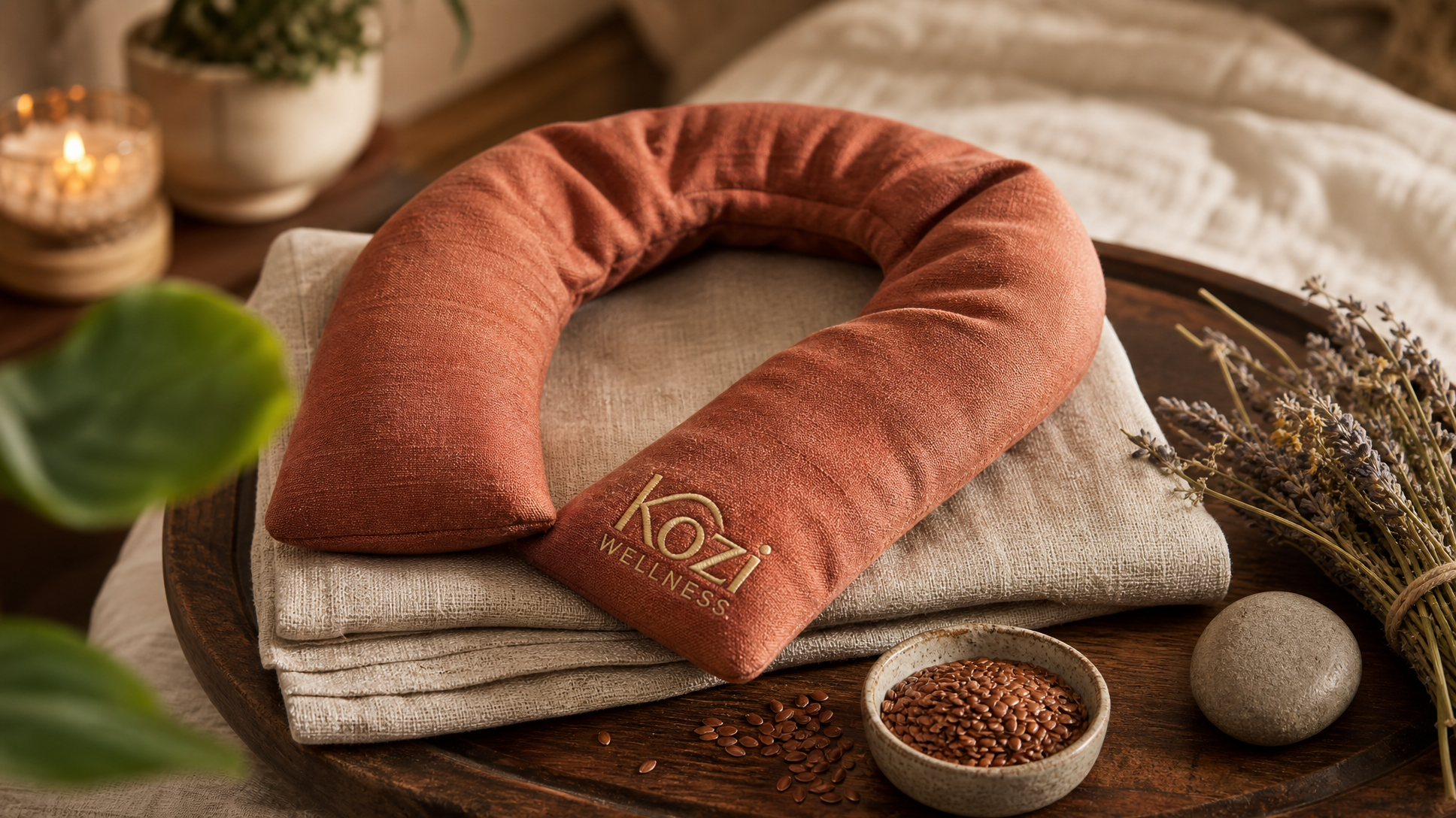
Herbal aromatherapy wraps combine that sustained warmth with the calming effect of herbal scent, which adds a sensory layer that helps quiet the mental noise that keeps tension locked in. This is the approach behind Kozi neck wraps and back wraps — designed to deliver consistent herbal warmth to the areas where tension accumulates most: the neck, shoulders, and upper back.
Used before bed, a warm herbal wrap can do something collagen simply can't: help your body cross the threshold from tense to relaxed before your head hits the pillow. That's not a small thing. That's the difference between lying in bed waiting for sleep and actually getting the restorative rest your body needs to use whatever you've given it — collagen included.
A practical approach that uses both
This isn't an either/or. If you're taking collagen and finding genuine benefit for your joints or skin, keep going — the evidence supports it. But if you're also waking up stiff, carrying tension through your shoulders all day, or lying awake with a neck that won't unwind, adding collagen isn't going to solve that. You need to address the tension directly.
Think of it this way: collagen works on structure. Herbal warmth works on the state your muscles are in right now. Both matter. Neither replaces the other.
If you're curious about the eye fatigue side of this — the tired, strained eyes that often come with the same stress and tension pattern — this post on why your eyes feel exhausted by evening covers that piece specifically.
The tension collagen can't reach is real, and it's worth addressing on its own terms. Explore Kozi herbal neck and shoulder wraps and find the one that fits where you carry your tension most.
Frequently Asked Questions
How long does it take to see results from collagen supplements?
Most research on collagen supplementation looks at outcomes over an 8-to-12-week period of consistent daily use. Skin hydration and elasticity changes tend to show up on the earlier end of that range; joint and cartilage support may take longer to become noticeable. Results vary depending on age, diet, and the specific benefit you're targeting.
Can collagen supplements help with muscle soreness or tension?
Collagen supports the connective tissue around muscles — tendons and ligaments — which can help with recovery from exercise-related strain over time. But it doesn't have a direct mechanism for releasing chronic muscle tension, which is caused by prolonged contraction and stress rather than connective tissue breakdown. For that, warmth, movement, and targeted therapy are more effective tools.
Is a heated neck wrap safe to use every night?
Herbal heat wraps designed for home use — like microwave-heated aromatherapy wraps — are generally safe for regular use when used as directed by the manufacturer. The key is to heat them to a comfortable warmth, not excessive heat, and to avoid falling asleep while wearing one. If you have any underlying health conditions affecting circulation or skin sensitivity, check with your healthcare provider first.
Do herbal wraps actually help with sleep, or is it just placebo?
The warmth component has a physiological basis: heat applied to tense muscles promotes relaxation by increasing local circulation and reducing the muscle's resting tension. The body's natural sleep-onset process also involves a drop in core temperature, and warming the skin beforehand can support that transition. Aromatherapy adds a sensory calming signal. Whether you call that placebo or mechanism, the practical outcome — a more relaxed body at bedtime — is real for many people.