


Most people with persistent back tension do one of two things: they book a massage appointment they'll cancel, or they buy a foam roller that ends up under the bed. Neither actually solves the problem — partly because back tension rarely has a single cause, and partly because the best recovery tools are the ones you'll actually use consistently.
This isn't a list of things that require a gym, a practitioner, or a Pinterest-level home setup. These are techniques you can do in your living room, at your desk, or on a slow Sunday morning — ranked roughly by the type of tension they address best.
Start with Your Breath (Seriously)
Before anything else: if your back is tight, your nervous system is probably braced. Shallow chest breathing keeps the muscles around your spine in a low-grade state of contraction. Diaphragmatic breathing — slow, belly-expanding inhales through the nose — signals the body to downshift. It sounds too simple to matter, but spending even a few minutes breathing this way before any other technique makes everything that follows more effective.
Lie on your back with your knees bent. Place one hand on your chest, one on your belly. Breathe so the bottom hand rises first. That's it. Do it for a few minutes before you move on.
Targeted Stretching for the Two Most Common Culprits
Most back tension lives in one of two places: the upper back and between the shoulder blades, or the lower back and hips. The stretch you need depends on where yours is.
Upper back and shoulder blade tightness
A doorway chest opener helps here. Stand in a doorframe, place your forearms on either side at roughly shoulder height, and gently lean your body forward until you feel a stretch across your chest and upper back. Hold for 20–30 seconds. This counters the forward-rounded posture that causes most upper-back tension — especially if you spend hours at a desk or looking at a screen.
Lower back and hip tightness
The supine figure-four stretch (lying on your back, crossing one ankle over the opposite knee, and gently pulling the uncrossed leg toward your chest) relieves tension in the piriformis and glutes that often radiates into the lower back. Hold each side for 30–45 seconds and breathe through it rather than forcing the stretch.
Neither of these requires flexibility or equipment. They just require consistency — doing them a few times a week rather than once and forgetting.
Heat Therapy: The Most Underused Recovery Tool
Stretching loosens what's already tight. Heat gets into the tissue before the tension becomes a problem. Warmth increases blood flow to the area, helps muscle fibers relax, and makes any subsequent movement or stretching significantly more effective. The challenge with most heat options — heating pads, hot water bottles — is that they require you to stay still and hold them in place. The moment you shift, you lose contact.
This is where the Kozi Wellness Quilted Back Wrap Vest genuinely earns its place in a recovery routine. It's a wearable, vest-style wrap that covers your full back — from the shoulders down to the lower back — and stays in place without you holding it. The quilted black panel you see in the photo is weighted with flax seeds, which contour to the shape of your back rather than sitting flat against it the way a standard pad does. That weight and contact is what allows the heat to penetrate more deeply.
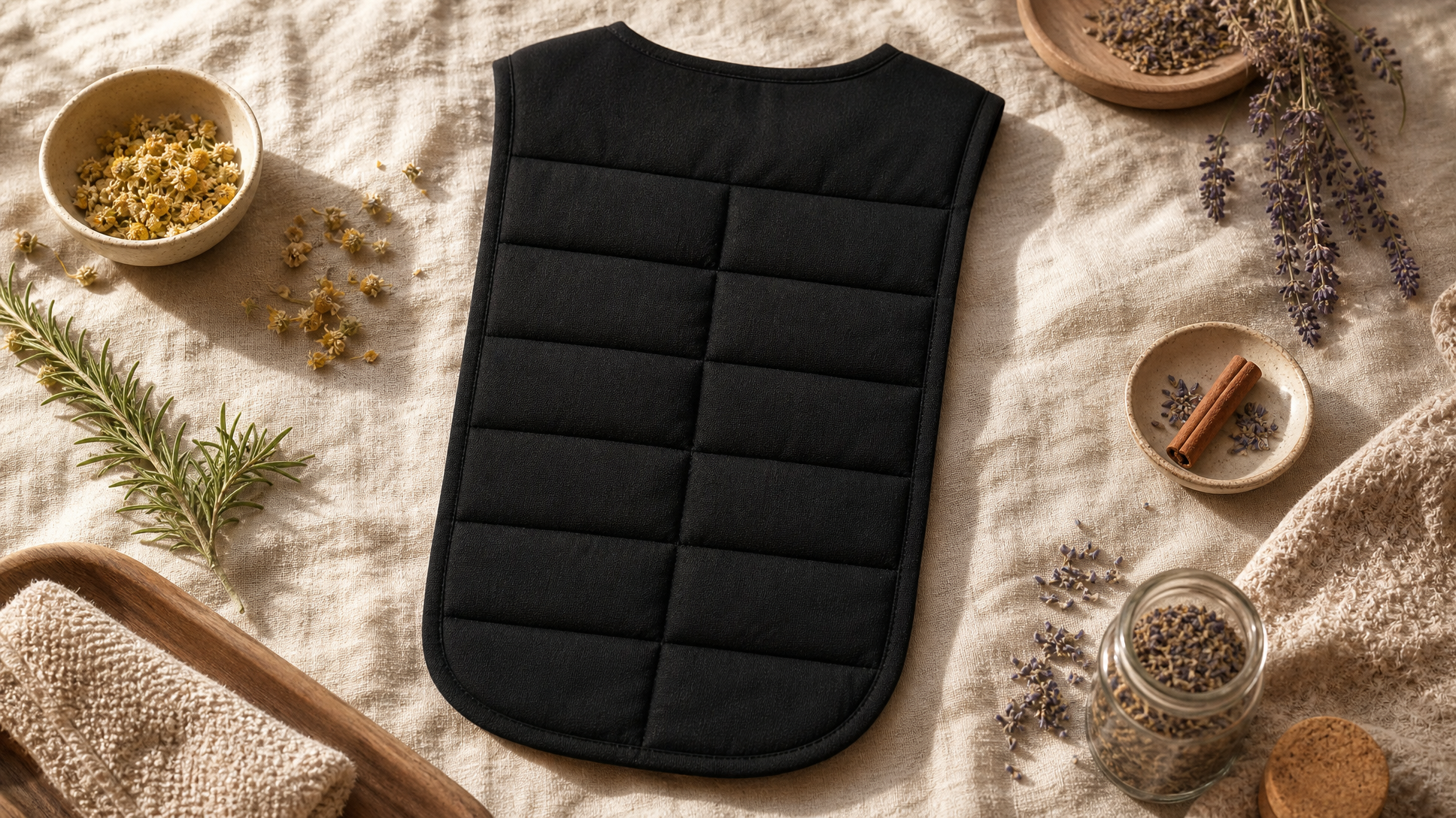
What makes it different from a plain heat pad is the herbal layer. The wrap contains an 8-herb blend — chamomile, lavender, spearmint, peppermint, lemongrass, rosemary, cinnamon, and hops — that releases aromatherapy as it warms. You're not just applying heat; you're also getting the calming effect of inhaling those herbs while your back unwinds. For people who use it during meditation, light reading, or even at a desk, that combination matters.
It's also freezable, which makes it useful for a different kind of recovery: acute soreness or inflammation after a workout, where cold is often more appropriate than heat. One wrap, two modes.
The plush fabric cover is removable and machine washable — a practical detail that matters if you're using it regularly rather than just occasionally.
Gentle Movement Between Sessions
The worst thing you can do for chronic back tension is rest completely. Muscles that don't move become more guarded, not less. Between stretching sessions, low-intensity movement — a short walk, slow bodyweight squats, or even standing and shifting your weight every 30 minutes — keeps circulation moving and prevents the stiffness that sets in when you sit or lie still for too long.
If you work at a desk, set a reminder to stand and do five slow shoulder rolls and a gentle torso rotation every hour. It takes less than a minute and makes a real difference over the course of a day.
Cold Therapy for Post-Workout Recovery
If your back tension comes specifically from exercise — lifting, running, or anything that loads the spine — cold application in the first day or so after a session can reduce soreness more effectively than heat. Research supported by the NIH has long established that cold therapy helps manage acute muscle soreness by reducing inflammation and slowing nerve conduction in the area.
The same Kozi wrap, pulled from the freezer, works here too. Because it's contoured and weighted, it maintains contact across the full back rather than sliding off the way an ice pack tends to. Cold therapy works best applied relatively soon after activity, not days later when the acute phase has passed.
Sleep Position and Surface
Recovery doesn't only happen when you're actively doing something. A significant portion of muscle repair happens during sleep — and if you're sleeping in a position that keeps your back muscles contracted, you're undoing part of what your daytime routine accomplishes.
Back sleepers: a pillow under your knees takes pressure off the lumbar curve. Side sleepers: a pillow between your knees keeps your hips stacked and prevents your lower back from rotating overnight. Stomach sleeping is the one position that consistently loads the lumbar spine in an unhelpful way — if you can train yourself off it, your back will thank you.
The Honest Trade-Off
None of these techniques replace professional care if you're dealing with an injury, nerve involvement, or pain that's worsening rather than fluctuating. If your back pain is sharp, radiates down a leg, or came on suddenly after a specific incident, see a doctor before trying any at-home recovery approach.
But for the chronic, low-grade tightness that most people carry — the kind that builds from desk work, stress, poor sleep, and too little movement — a consistent home routine addresses the actual cause better than occasional appointments that treat the symptom.
The goal is a routine you'll repeat, not a perfect one you'll abandon. Start with the breathing, add the stretches you'll actually do, and anchor it with something that makes the heat therapy genuinely effortless.
The Kozi Quilted Back Wrap Vest is built for exactly that kind of routine — full back coverage, herbal warmth, and no setup. Shop it at Kozi Wellness, and use code RELAX10 for 10% off your order.
Frequently Asked Questions
How long should I apply heat to my back for tension relief?
General guidance for heat therapy is around 15–20 minutes per session. Longer than that doesn't necessarily increase the benefit and can occasionally irritate sensitive skin. Always follow the product's specific instructions, and avoid falling asleep with any heat wrap in place.
Can I use the Kozi Quilted Back Wrap Vest if I have a specific back injury?
If you're dealing with a diagnosed injury, nerve pain, or any condition being managed by a healthcare provider, check with them before using heat or cold therapy. For general muscle tension and everyday tightness, the wrap is designed for at-home comfort use — but it's not a medical device and isn't a substitute for professional treatment.
How do I clean the Kozi Back Wrap Vest?
The plush fabric cover is removable and machine washable, which makes regular cleaning straightforward. The inner herbal insert should not be washed — follow the care instructions included with the product for the insert itself.
Is heat or cold better for chronic back tension?
For chronic tightness and ongoing muscle tension — the kind that isn't tied to a recent injury or workout — heat is generally more effective because it relaxes muscle fibers and improves circulation. Cold is better suited for acute soreness or inflammation, particularly in the first day or two after physical activity. The Kozi Back Wrap Vest supports both modes since it's microwavable and freezable.