


The candle burns down. The stress doesn't.
You've probably bought at least one "stress relief" kit that lived on the bathroom shelf for a week before becoming background furniture. A bath bomb, a scented roller, a lavender candle. None of them bad, exactly — but none of them built to handle the kind of stress that parks itself in your shoulders at 6 p.m. and refuses to leave.
The problem isn't that you bought the wrong brand. It's that most products marketed as stress relief are sensory novelties: they feel nice once, maybe twice, but they don't address the underlying pattern of how your stress actually arrives. And once you understand that pattern, picking the right tool gets a lot simpler.
First: what kind of stress are you actually dealing with?
Stress isn't one thing. It tends to show up in one of three ways — or some combination of all three.
Physical stress is the one your body keeps score on: tight neck muscles from staring at a screen, a lower back that aches by mid-afternoon, shoulders that creep toward your ears during a long call. You feel it as tension, stiffness, or a low-grade ache that won't fully resolve.
Mental stress is the racing-thoughts variety — the kind that makes it hard to fall asleep, hard to focus, hard to feel present. It's less about your body and more about your nervous system staying in overdrive long after the actual stressor has passed.
Eye and sensory fatigue is its own category and often gets lumped in with both of the above. Tired, strained eyes after hours of screen time can compound headaches, disrupt sleep, and make everything feel harder than it is.
Most people are dealing with at least two of these at once. The mistake is buying a product designed for one while expecting it to fix another.
What actually works — by stress type
For physical tension: heat and cold therapy wraps
If your stress lives in your body — in your neck, your upper back, your shoulders — the most direct intervention is also one of the oldest: applied heat or cold to the affected area. Heat helps relax muscle tissue and increase circulation; cold can reduce inflammation and numb acute discomfort. Neither requires a prescription, a gym, or a 45-minute routine.
What separates a genuinely useful wrap from a novelty one is how it's made. Look for wraps that conform to the specific body area you're targeting (a flat pad won't hug a neck the way a shaped wrap will), that retain temperature long enough to actually do something, and that use natural fill materials — flax seeds and herbal blends are common in quality wraps because they hold heat evenly and release a gentle aromatherapy effect as they warm.
Kozi Wellness builds its neck wraps and back wraps around exactly this — herbal blends and flax seeds in shaped, durable fabric designed to sit correctly on the body and last through regular use. That last part matters more than it sounds: a wrap you actually keep reaching for is worth ten that end up in a drawer.
For mental stress and sleep disruption: weighted and aromatic eye therapy
When the stress is more mental than physical — the kind that keeps you staring at the ceiling — the goal is nervous system downregulation, not muscle relief. That's a different tool.
Gentle, consistent pressure on the eye area (from a weighted eye pillow or a well-fitted eye mask) can encourage the body to shift out of a heightened state. Pair that with a calming herbal scent — lavender is the most studied for this purpose — and you have something that works on two channels at once: tactile and olfactory.
The key word is gentle. A mask that's too heavy or doesn't fit properly will just be uncomfortable. Look for something with a soft, breathable fabric, a shape that blocks light fully, and enough weight to feel grounding without feeling restrictive. Kozi's eye masks and eye pillows are designed for exactly this use — light enough to wear comfortably through a full night, weighted enough to feel intentional.
If eye fatigue is part of your stress pattern, it's worth reading more about what's actually happening when your eyes feel wrecked by evening — this post breaks it down clearly.
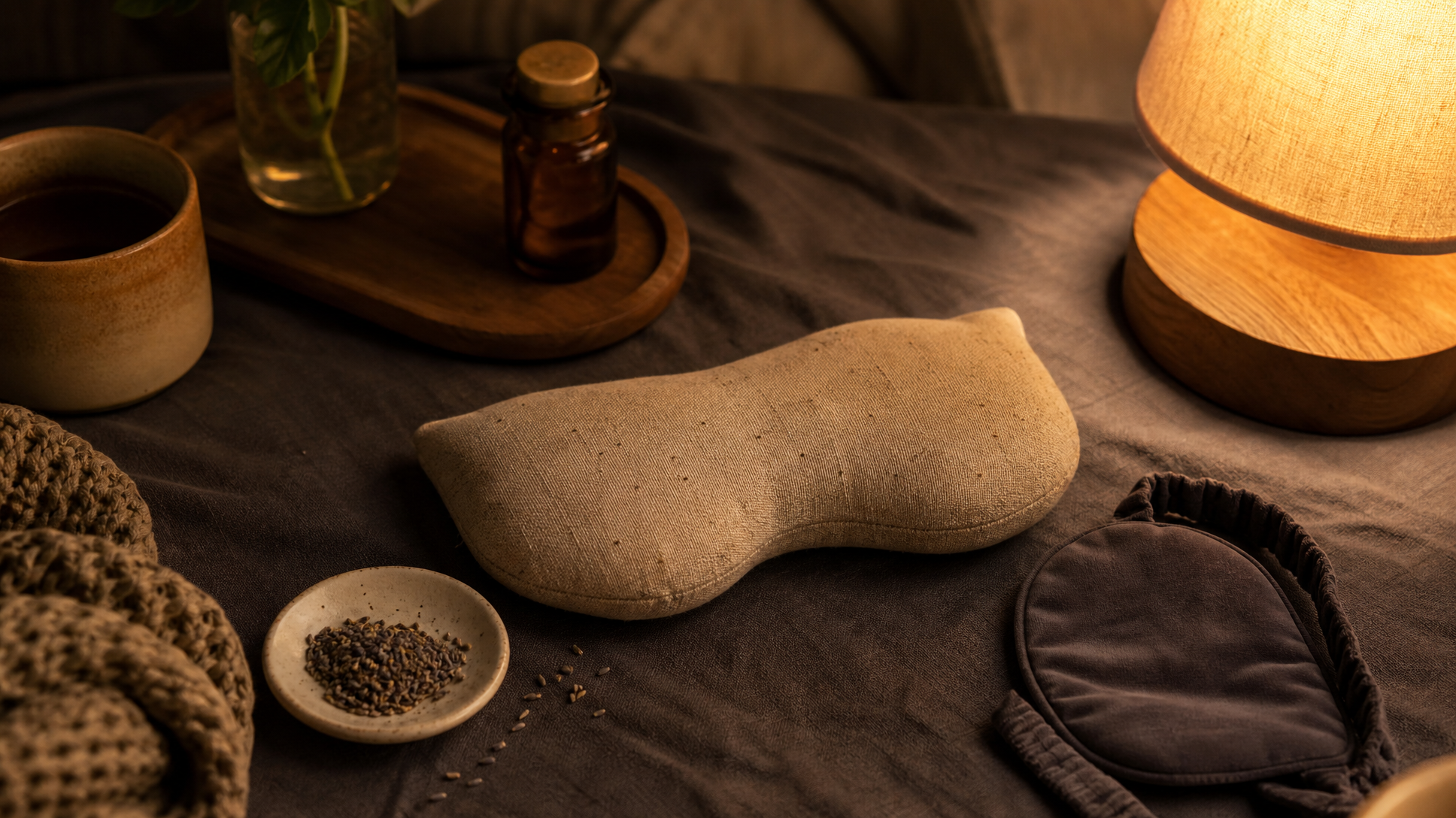
For sensory overload: aromatherapy as a reset, not a treat
Aromatherapy gets dismissed as a luxury add-on, but that undersells it when it's used deliberately. The olfactory system has a direct pathway to the limbic system — the part of the brain involved in emotional regulation — which is why a specific scent can shift your state faster than almost anything else you can do in 30 seconds.
The catch: it works best as a consistent cue, not a one-time experience. Using the same herbal scent during every wind-down session trains your nervous system to associate that smell with rest. A candle burned occasionally doesn't build that association. An herbal wrap you heat up every evening before bed does.
This is one reason the combination of heat therapy and aromatherapy in a single product is more effective than either alone — you're giving your body two simultaneous signals to slow down.
For breathwork and active stress management: tools that support the practice
Breathwork — slow, deliberate breathing patterns — is one of the most evidence-backed ways to reduce acute stress. The NIH has published research on how slow breathing influences the autonomic nervous system. But breathwork is a practice, not a product, and most people abandon it because lying on a hard floor with nothing supporting your neck isn't relaxing — it's just uncomfortable.
This is where a good neck or back wrap earns its place even if you're not using it for muscle relief specifically. Something warm supporting your neck while you do a five-minute breathing exercise changes the experience entirely. The warmth itself is calming; the support removes the physical distraction. You're more likely to actually do it, and more likely to stay with it long enough for it to work.
The buying guide: what to actually look for
Before you add anything to your cart, run it through these four questions:
- Does it target the right stress type? Physical tension needs localized heat or cold. Mental stress needs nervous system cues — pressure, scent, darkness. Sensory fatigue needs eye relief. Don't buy a bath product for a neck problem.
- Is it built for repeated use? One-use products (bath bombs, single-use patches) can feel good but don't build the consistent routine that actually reduces baseline stress over time. Look for something durable.
- Does it fit the body area correctly? A shaped neck wrap, a contoured eye mask, a back wrap with the right dimensions — fit matters for both comfort and effectiveness. Generic shapes often don't stay in place.
- Will you actually use it? The best stress relief product is the one that's easy enough to reach for on a Tuesday night when you're already tired. If the setup is complicated, it won't happen.
One honest caveat
No product resolves chronic stress on its own. If your stress is structural — workload, relationships, health — a wrap or a mask is a tool for managing the symptoms, not eliminating the source. But managing symptoms well, consistently, genuinely matters. Better sleep, less physical tension, a nervous system that gets regular chances to downregulate — those things compound. They don't fix everything, but they make everything else more manageable.
Start with the stress type you feel most acutely. Get one good tool for it. Use it consistently for a few weeks before adding anything else. That's a better plan than a drawer full of half-used novelties.
Browse the full range of herbal wraps, eye masks, and aromatherapy products at Kozi Wellness — and if you want to take 10% off your first order, use code RELAX10 at checkout.
Frequently Asked Questions
What's the difference between a heat wrap and a regular heating pad for stress relief?
A standard electric heating pad delivers heat but not much else. Herbal wraps filled with materials like flax seeds and botanicals conform more naturally to the body's curves, hold heat without a cord, and release a gentle aromatherapy scent as they warm — giving you a sensory signal to relax on top of the physical warmth. For stress relief specifically, that combination tends to be more effective than heat alone.
Can I use a cold wrap instead of a warm one for stress-related tension?
Yes — cold therapy is particularly useful for acute discomfort or inflammation, such as a tension headache or a muscle that feels hot and tight. Many herbal wraps can be used warm or cold depending on what your body needs. If you're unsure, warm therapy tends to be better for general relaxation and muscle loosening, while cold is better for sharper, more localized discomfort.
How long should I use a stress relief wrap or eye mask each session?
There's no universal rule, but most people find that even 10–15 minutes of consistent, uninterrupted use — lying still, breathing slowly, without a screen — is enough to feel a noticeable shift. The key is consistency over duration: a short daily session tends to do more than an occasional long one.
Are herbal wraps safe to use every day?
For most healthy adults, yes — daily use of a warm herbal wrap for relaxation is generally safe. Follow the care and heating instructions that come with your specific product, avoid overheating, and don't fall asleep with a heated wrap on. If you have a medical condition affecting circulation or skin sensitivity, check with your doctor first.