


You've probably stood in a supplement aisle, or scrolled through a wellness app store, feeling more overwhelmed than when you started. Ashwagandha or magnesium? A sleep tracker or a meditation subscription? The options multiply faster than the stress they're supposed to fix.
Here's the thing nobody says out loud: most of these tools are solving different problems. They're not interchangeable. And when you pick one that doesn't match your actual problem, it doesn't fail because you used it wrong — it fails because it was never designed for what you needed.
So let's actually map this out.
What Supplements Do (and Don't Do)
Certain supplements have real, evidence-based roles in supporting the nervous system over time. Magnesium, for instance, is widely studied for its role in muscle function and sleep quality. Adaptogens like ashwagandha have a body of research behind them for long-term stress hormone regulation. These aren't snake oil — for some people, they're genuinely useful.
But the key phrase is over time. Supplements work systemically, which means they need consistent use across weeks before you feel a meaningful shift. They don't do anything about the knot in your shoulders right now, at 9 p.m., after a brutal day. They're a slow, internal intervention — useful for the chronic, harder to lean on for the acute.
They also require a functioning gut to absorb, interact with medications, and vary wildly in quality depending on the brand. If you're already managing several things health-wise, adding a stack of supplements isn't always straightforward.
What Trackers and Apps Do (and Don't Do)
Wearables and wellness apps are genuinely good at one thing: making the invisible visible. Seeing your heart rate variability dip after a poor night, or noticing that your stress scores spike every Tuesday before a team meeting — that kind of data can be clarifying. Awareness is the first step toward change.
But awareness isn't relief. A tracker can tell you that you're tense. It cannot make you less tense. And for a lot of people, obsessively monitoring sleep scores or recovery metrics adds a layer of anxiety on top of the original problem. You go to bed worried about whether your sleep will be good enough to score well. That's not a rest state.
Breathing apps and guided meditations are more directly therapeutic — they activate the parasympathetic nervous system, which is the body's actual brake pedal for the stress response. But they require mental engagement at a moment when your brain is already fried. Some nights, staring at a screen for a guided session is the last thing you want.
What Warmth Does — and Why It's Different
Stress doesn't just live in your head. It lives in your trapezius, your jaw, the space behind your eyes, the base of your skull. Chronic tension is a physical accumulation — and it responds best to physical intervention.
Heat therapy works on a layer that neither supplements nor trackers touch. Warmth applied to tense muscles increases local circulation, encourages the tissue to soften, and signals the nervous system to downshift. It's not metaphorical comfort — it's a direct mechanical and neurological response. The body interprets warmth as safety, and safety is the opposite of the stress state.
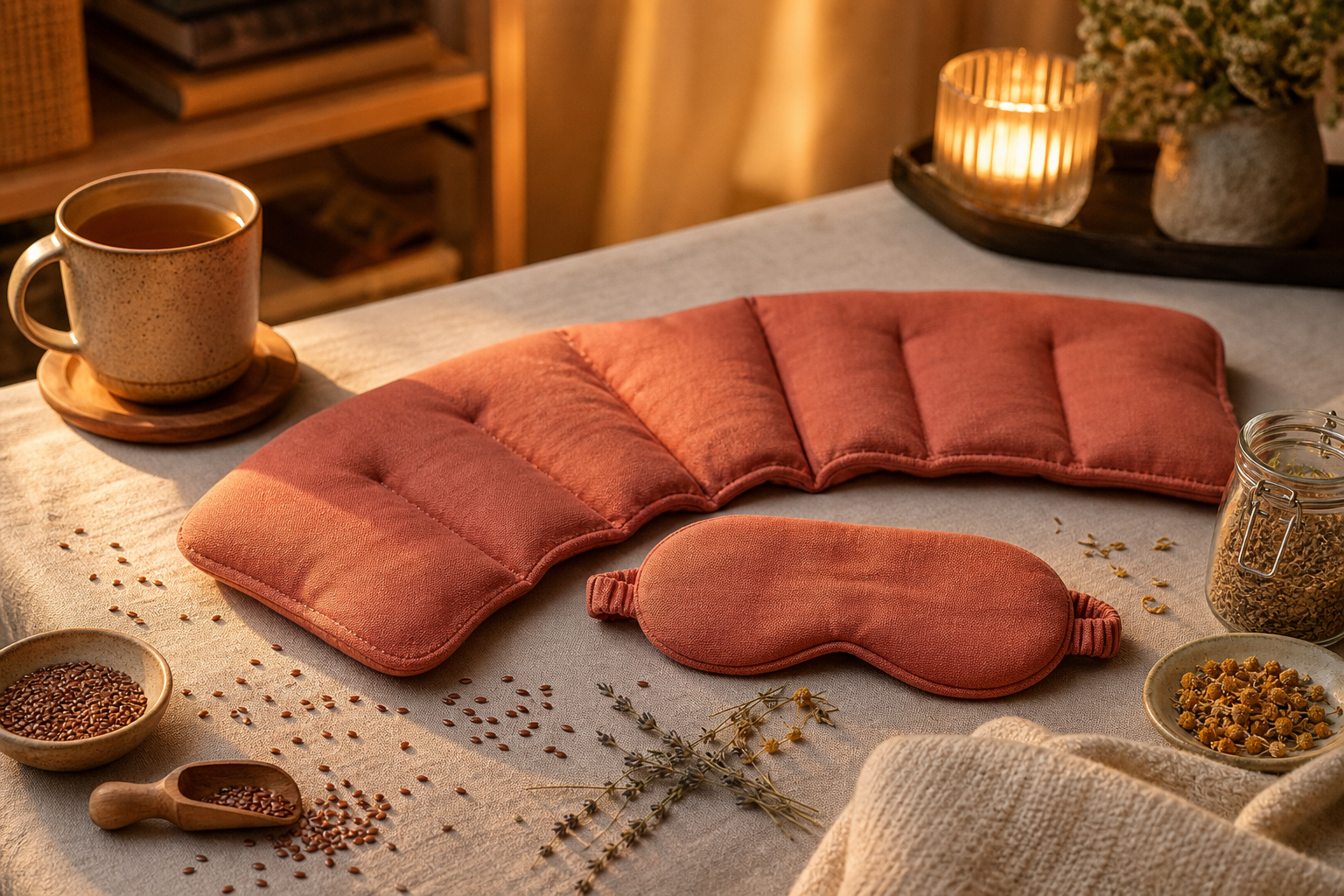
Herbal aromatherapy wraps add another dimension to this. The scent of certain herbs — lavender being the most studied — has been shown in research to influence the limbic system, the part of the brain involved in emotional regulation. When warmth and herbal scent work together, you're addressing both the physical and sensory layers of stress simultaneously.
This is what makes herbal warmth therapy categorically different from the other options: it's immediate, it's tactile, it requires nothing from you mentally, and it works on the body directly — not through a systemic pathway that takes weeks, and not through a screen you have to engage with.
The Honest Comparison
None of these approaches is universally better. They serve different needs at different timescales.
- Supplements are best for long-term nervous system support — think months, not minutes. If you're managing chronic stress and your diet lacks key nutrients, they can be a meaningful part of the picture.
- Trackers and apps are best for building self-awareness and habit formation. If you're someone who responds well to data and structure, they can help you identify patterns you'd otherwise miss.
- Warmth therapy is best for immediate, physical relief — the tension you can feel right now, in your neck and shoulders and eyes, that needs to release tonight. No waiting period, no screen time, no mental effort required.
The mistake most people make is treating these as competing solutions and picking one. They're actually complementary — and warmth therapy is the one most people overlook, because it doesn't come in a capsule or an app, and it doesn't generate data you can screenshot.
Where Kozi Fits In
Kozi Wellness makes herbal wraps, neck wraps, and eye masks designed specifically for this physical layer of stress relief. Products like the Kozi Soothing Neck Wrap and the Kozi Revitalizing Back Wrap are filled with herbs and flax seeds, designed to be warmed and draped over the areas where tension collects — no pills, no charging cable, no notifications. If your eyes are carrying the day's fatigue, the Kozi eye mask line addresses exactly why that happens and what helps.
These aren't a replacement for everything else in your wellness toolkit. They're the piece that handles what the other tools can't — the tension that's already in your body, waiting to be released.
If you've been reaching for a supplement bottle every time stress peaks, it might be worth asking whether what your body actually wants is warmth. Explore Kozi's herbal wraps and eye masks — a no-pill, no-screen way to release the tension stress leaves behind.
Frequently Asked Questions
Can I use herbal warmth therapy alongside supplements or meditation apps?
Yes — and that's actually the most practical approach for most people. These tools work on different layers of the stress response, so they don't cancel each other out. Warmth therapy handles the immediate physical tension; supplements and mindfulness practices support longer-term nervous system health. Using them together is more effective than relying on any single one.
How quickly does heat therapy work for muscle tension?
Heat therapy tends to work relatively quickly compared to systemic approaches like supplements. Most people notice muscles beginning to soften and ease within the first several minutes of application. It's one of the reasons warmth is the go-to for immediate, in-the-moment relief rather than long-term prevention.
Are herbal wraps safe to use every day?
Herbal wraps are generally designed for regular use as part of a daily self-care routine. As with any heat therapy, it's sensible to follow the product's specific instructions and avoid applying directly to broken skin or using at temperatures that feel uncomfortable. If you have a specific medical condition affecting circulation or sensation, check with your doctor first.
What's the difference between warm therapy and cold therapy for stress?
Warm therapy is generally better for muscle tension, stiffness, and the kind of chronic tightness that stress causes — it relaxes tissue and encourages blood flow. Cold therapy is more effective for acute inflammation or swelling. Many herbal wraps, including those in the Kozi range, can be used for both warm and cold applications, giving you flexibility depending on what your body needs on a given day.