


You've probably tried the supplements. The ashwagandha capsules, the magnesium glycinate before bed, maybe a calming gummy or two. And they might be helping — genuinely. But if you still end your day with your shoulders somewhere near your ears and a neck that feels like a wrung-out towel, it's worth asking: are you solving the right problem?
Stress relief supplements and physical tension relief aren't the same thing. They work on different layers of the same experience, and conflating them is why a lot of people spend money on one and still feel half-fixed.
What Stress Relief Supplements Actually Do
Most supplements marketed for stress fall into a few categories: adaptogens, amino acids, and minerals. Each works differently.
Adaptogens — herbs like ashwagandha, rhodiola, and holy basil — are thought to help the body regulate its stress response over time. Research into their mechanisms is ongoing, but the general idea is that they interact with the HPA axis (the hormonal pathway behind your body's stress response) to blunt the cortisol spike that chronic stress triggers. They're not sedatives. They don't make you calm on the spot; they're more like a long-game buffer.
Amino acids and minerals like L-theanine, GABA, and magnesium work more directly on the nervous system — calming neural excitability, supporting neurotransmitter function, or easing the physical symptoms of anxiety like a racing heart. Magnesium in particular plays a role in muscle function, which is why some people find it helps with nighttime cramps or restlessness.
The honest summary: supplements can take the edge off mental stress and support your nervous system. What they don't do is reach into the muscle tissue of your neck and shoulders and release the knots that have been building there since Tuesday's deadline.
The Part Supplements Can't Touch
Here's the loop most people don't realize they're stuck in: mental stress causes muscle tension. But muscle tension also feeds mental stress right back. When your trapezius muscles are chronically tight, your nervous system reads that physical state as a threat signal — which keeps your stress response elevated even when the original stressor is gone.
This is why you can take every supplement on the shelf and still feel strung out by 6 p.m. The physical layer of tension has its own momentum, and it needs a physical intervention to interrupt it.
Heat therapy is one of the most straightforward ways to do that. Warmth increases blood flow to the area, helps muscles soften and release, and activates the parasympathetic nervous system — the branch responsible for rest and recovery. Cold therapy, on the other hand, can reduce inflammation and numb acute soreness. Neither of these things comes in a capsule.
How to Use Both Together (Without Overcomplicating It)
The goal isn't to choose one or the other. It's to be clear about what each is doing so you're not expecting a supplement to fix something it was never designed to fix.
Think of it this way: your supplement routine works on your internal chemistry. Your physical tension routine works on your body's actual tissue. You need both tracks running if you want to feel genuinely better — not just less anxious but still stiff.
A practical rhythm that works for a lot of people: take your calming supplement in the evening, then pair it with 15–20 minutes of direct heat on your neck and shoulders. The supplement starts doing its job on your nervous system while the heat does its job on the muscle. You're addressing both layers at the same time instead of hoping one will cover for the other.
What to Look for in a Neck and Shoulder Wrap
Not all heating pads are built the same, and the neck-and-shoulder area is particularly awkward to treat — a flat electric pad slides off, a standard hot water bottle doesn't contour, and a tight space like the trapezius muscle needs sustained, even contact to actually respond.
The things that genuinely matter:
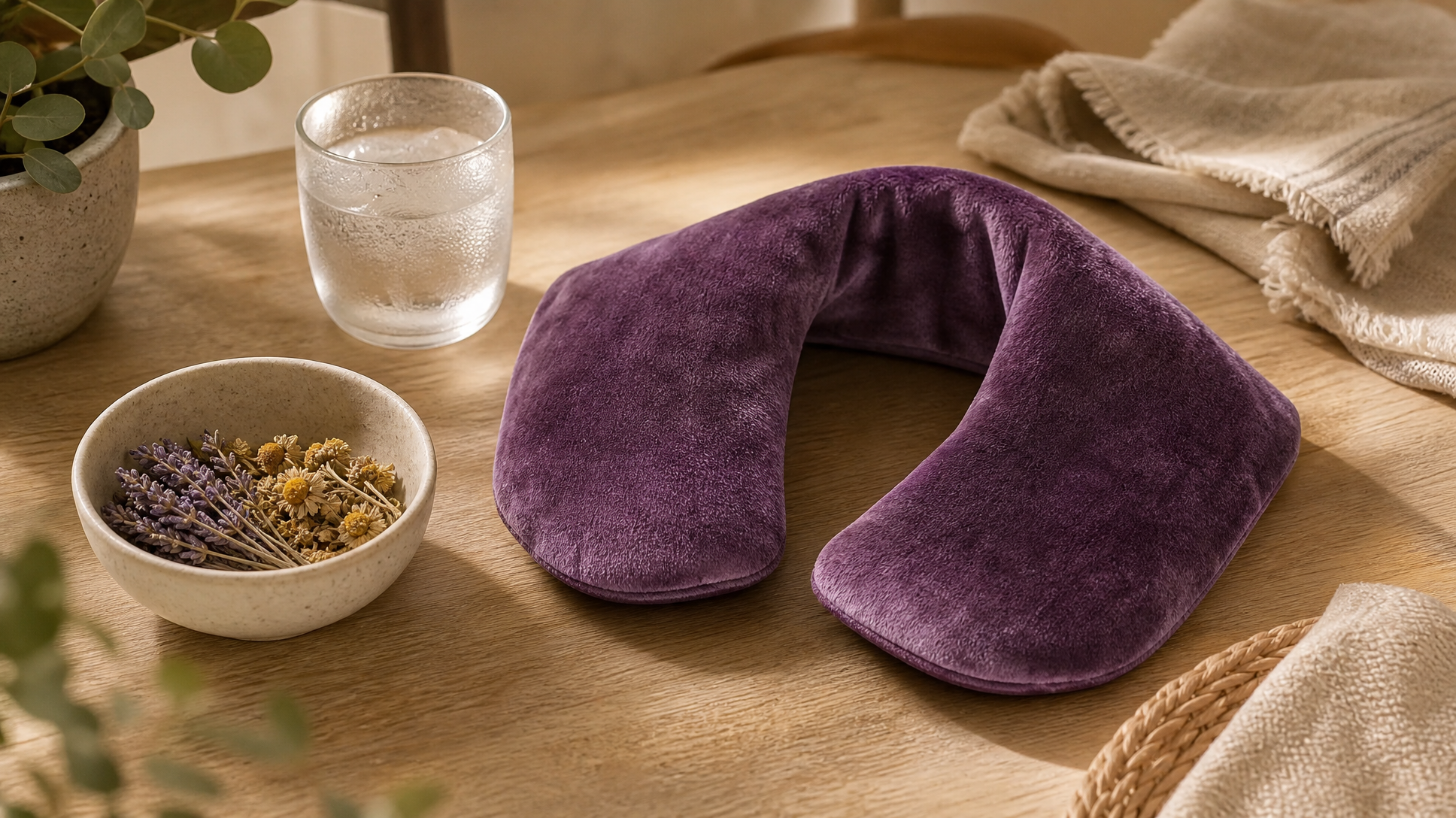
- Contoured shape. A horseshoe or collar-style design drapes over the neck and down onto the shoulders, staying in place while you sit, meditate, or just decompress on the couch. A flat pad won't do this.
- Weight and fill. Wraps filled with flax seeds or similar natural grains hold heat longer than plain fabric, and the gentle weight helps the wrap conform to your shape rather than sitting on top of it.
- Dual hot and cold capability. Some tension responds better to heat; acute soreness or inflammation often responds better to cold. A wrap that does both means you're not buying two different products.
- Aromatherapy. This isn't just a nice extra. Scents like lavender, chamomile, and peppermint have a well-documented calming effect on the nervous system — so a herbal wrap quietly supports the mental side of stress relief at the same time it's working on the physical side.
The Kozi Neck & Shoulder Wrap hits all of these. It's a plush, horseshoe-shaped wrap weighted with flax seeds for a contoured fit, filled with a physician-formulated blend of herbs including chamomile, lavender, spearmint, peppermint, lemongrass, rosemary, and more. You can microwave it for heat therapy or freeze it for cold therapy — same wrap, two modes. The fabric is soft enough that it genuinely feels like something you want to put on rather than a clinical device you tolerate.
Customers who've used it consistently describe it as a kind of full-shoulder reset — the kind of relief that makes you realize how much tension you'd been carrying without noticing.
The Honest Takeaway
Supplements are a legitimate tool for stress. So is physical therapy, breathwork, and sleep hygiene. But none of them substitute for directly addressing the muscle tension that stress leaves behind in your neck and shoulders — and that tension, left alone, keeps the whole stress cycle running longer than it should.
If your supplement routine is working but you're still ending the day tight and sore, you haven't found the full solution yet. You've found half of it.
Add the physical layer. Your neck will tell the difference. Browse the Kozi Neck collection and find the wrap that fits your routine — it's a straightforward complement to whatever you're already doing for stress relief.
Frequently Asked Questions
Can stress relief supplements help with muscle tension in the neck and shoulders?
Some supplements — particularly magnesium — play a role in muscle function and may help with cramping or nighttime restlessness. But supplements work primarily on the nervous system and hormonal stress response, not on the muscle tissue itself. Chronic tightness in the neck and shoulders generally needs a direct physical intervention like heat therapy to release.
How often should I use a neck and shoulder heating wrap?
Most people find daily use — particularly in the evening — works well as part of a wind-down routine. For acute soreness, shorter sessions as needed are a reasonable approach. Always follow the specific instructions that come with your wrap, and avoid using heat on inflamed or swollen areas where cold therapy would be more appropriate.
Is it safe to use a heated neck wrap during meditation or yoga?
Yes — a well-designed, contoured neck wrap is specifically built to stay in place during seated activities like meditation. The horseshoe shape keeps it draped over the shoulders without needing you to hold it. Just make sure the wrap has cooled to a comfortable temperature before applying it, and don't use it during vigorous movement.
What's the difference between using heat vs. cold for neck tension?
Heat is generally best for chronic muscle tightness and general tension — it increases blood flow and helps muscles relax. Cold is better suited for acute soreness, inflammation, or pain that flares up suddenly. A wrap that offers both modes gives you the flexibility to respond to what your body actually needs on a given day, rather than committing to one approach.