

The Sleep Product Problem Nobody Talks About
Most people don't have a sleep problem. They have a sleep product problem — a drawer full of supplements they take inconsistently, a noise machine they stopped noticing after a week, and a sleep mask that slipped off by 2 a.m. The solution to bad sleep isn't buying more things. It's buying the right things for the right job.
This guide is for the person who wants to make one or two smart additions to their nighttime routine — not collect a wellness arsenal. We'll walk through each major category of sleep support item, what it's actually designed to do, and who genuinely benefits from it. Then we'll talk about how to layer them so they work together instead of overlapping.
Category 1: Sleep Supplements
What they do: Supplements like melatonin, magnesium, and herbal blends (valerian, ashwagandha, passionflower) work on your body's chemistry — either nudging your circadian rhythm, calming the nervous system, or easing the physical tension that keeps you wired at bedtime.
Who they suit: People whose sleep trouble is primarily internal — racing thoughts, anxiety, or a body clock that's been thrown off by shift work, travel, or irregular schedules. They're also a reasonable starting point if you've never tried anything at all.
The honest caveat: Supplements are not a long-term fix for chronic sleep issues, and they work best when your sleep environment is already reasonably set up. Popping melatonin in a bright, noisy room with your phone in hand is mostly wishful thinking. Before adding a supplement, it's worth asking whether your environment is doing its part first.
Category 2: Sound Tools
What they do: White noise machines, pink noise apps, and sleep soundscapes mask sudden environmental sounds — a car door, a snoring partner, a neighbor's TV — that interrupt light sleep stages and prevent you from reaching deeper rest.
Who they suit: Light sleepers in noisy environments, people who share a bedroom, and anyone whose sleep is disrupted by unpredictable sounds rather than difficulty falling asleep in the first place.
Where people go wrong: Buying a sound machine when the real issue is stress or physical discomfort. Sound masking can't relax a tense neck or quiet a mind that's already spinning. It's a great environmental tool, but it only solves an environmental problem.
Category 3: Light-Blocking Tools
What they do: Blackout curtains, sleep masks, and eye covers block ambient light that suppresses melatonin production and signals your brain to stay alert. Even low-level light from streetlamps, phone chargers, or a hallway can interfere with sleep quality.
Who they suit: Urban sleepers, early risers who need to sleep past sunrise, shift workers sleeping during the day, and anyone who wakes easily to light. This is one of the highest-ROI categories — light control is free if you use curtains, and a quality eye mask is typically one of the least expensive sleep purchases you'll make.
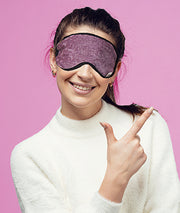
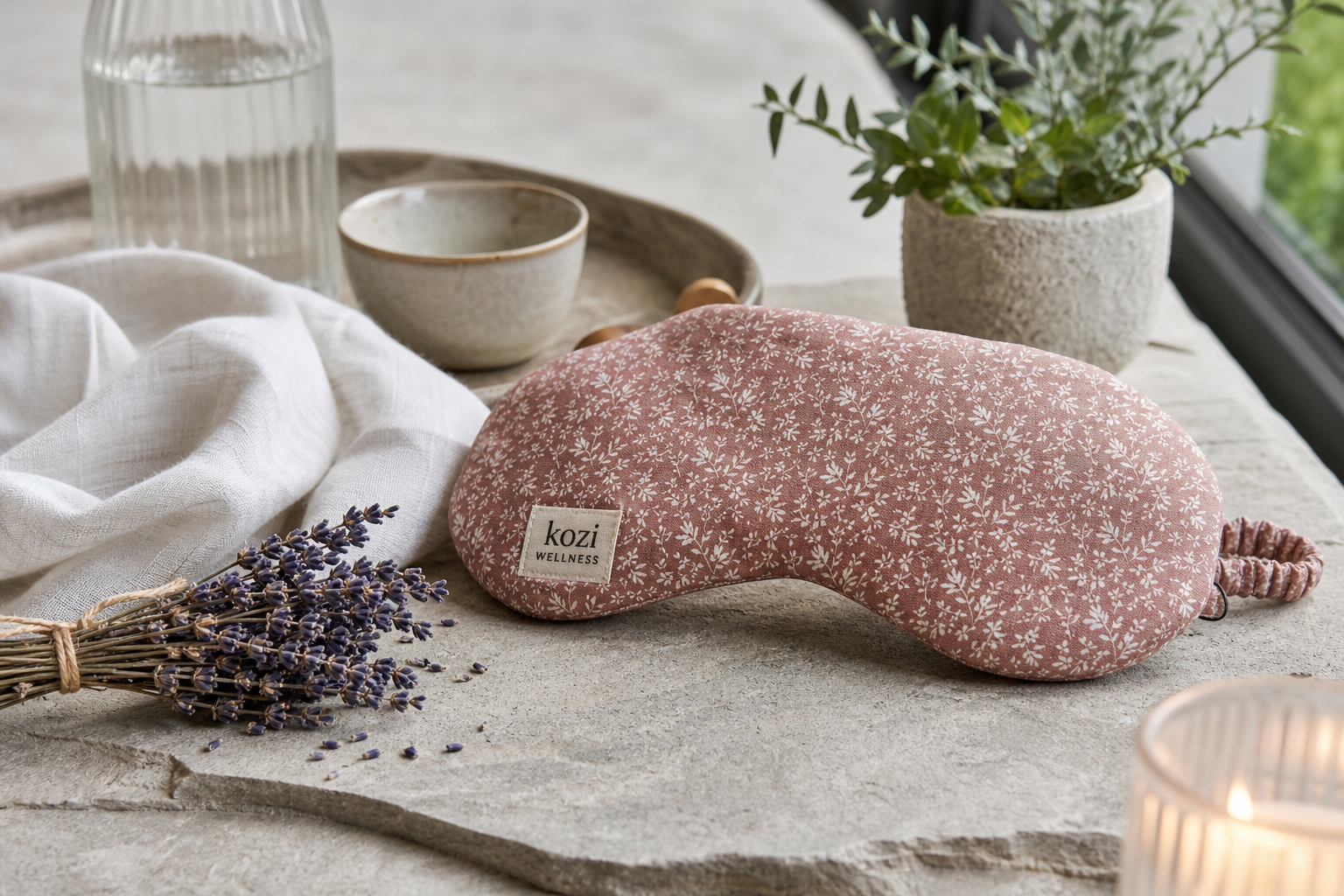
The upgrade worth knowing about: A basic sleep mask blocks light. A weighted or herbal eye mask does that and adds gentle pressure around the orbital area, which can ease the tension that builds behind tired eyes over the course of a day. If your eyes feel strained or heavy by evening — which is more common than people realize, especially with screen-heavy days — that added element makes a real difference. Why your eyes feel exhausted by evening is worth reading if this sounds familiar.
Category 4: Heat and Cold Therapy
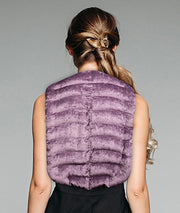
What they do: Warmth applied to the neck, shoulders, or back before bed helps relax muscles that have been holding tension all day — the kind of physical tightness that makes it genuinely hard to get comfortable, no matter how good your mattress is. Cold therapy, applied to the eyes or forehead, can reduce puffiness and the dull ache that comes from screen fatigue.
Who they suit: People who carry tension in their neck and shoulders (desk workers, drivers, anyone who hunches over a screen), those with chronic muscle discomfort, and people who notice that they can't fully relax at bedtime even when they're tired. If you find yourself shifting positions repeatedly trying to get comfortable, physical tension is likely part of the equation.
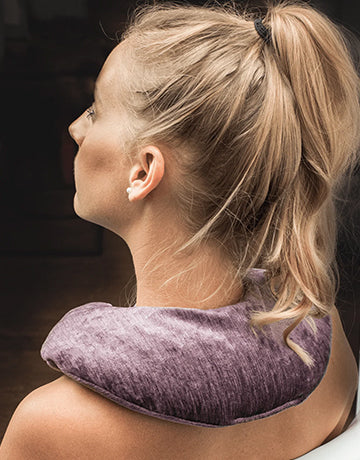
Herbal wraps — the kind filled with flax seeds and botanicals — are particularly well-suited here because they hold heat evenly and add the secondary benefit of aromatherapy. The warmth loosens the muscles; the scent cues the nervous system that it's time to wind down. It's a small thing, but the combination works in a way that a plain heating pad doesn't quite replicate.
What this category doesn't do: It won't fix a sleep schedule that's completely off-track, and it won't mask environmental noise. Think of it as the physical preparation layer — getting your body ready to receive sleep, rather than forcing it.
Category 5: Temperature Regulation Tools
What they do: Cooling mattress pads, breathable bedding, and temperature-regulating pillowcases address the fact that your core body temperature needs to drop slightly to initiate and maintain deep sleep. If you sleep hot, this is often the missing piece.
Who they suit: Hot sleepers, people going through hormonal changes that affect body temperature, and anyone who wakes up in the night feeling overheated. This is a category where the product has to match the specific physiology — no amount of herbal aromatherapy fixes a sleep environment that's genuinely too warm.
How to Layer Without Overlapping
The mistake most people make is buying two products that do the same job. A weighted blanket and a heating wrap both address physical comfort — you probably need one, not both. A white noise machine and a meditation app both target mental wind-down — pick the one that actually fits how your brain works at night.
A more useful framework is to think in three layers:
- Environment — light and sound. Get these right first, because no product compensates for a bedroom that's too bright or too loud. Blackout curtains or a sleep mask, plus sound masking if you need it.
- Body — physical tension and temperature. A neck or shoulder wrap before bed, a cooling layer if you sleep hot. This is the layer most people skip, and it's often the one doing the most damage to their sleep.
- Mind — the nervous system wind-down. A supplement, a breathing practice, or a consistent pre-sleep ritual. Aromatherapy fits here too — scent is one of the fastest pathways to a calmer state.
Most people only need one item per layer. Three well-chosen products beat a shelf of ten mediocre ones.
A Quick Checklist Before You Buy
- Is your bedroom reasonably dark? If not, start with light control before anything else.
- Do you wake up stiff or uncomfortable? Physical tension is a body-layer problem — heat therapy addresses it more directly than supplements.
- Are your eyes tired and strained by bedtime? An herbal eye mask handles both light-blocking and eye comfort in one step.
- Is your mind the last thing to settle? That's a mind-layer problem — scent, sound, or a supplement might help more than a physical product.
- Do you sleep hot? No amount of relaxation tools will fix a body that's overheating — address temperature first.
The goal isn't a perfect sleep stack. It's finding the one or two things that address your actual friction points and using them consistently.
Kozi's herbal eye masks and wraps fit into the body and environment layers — they block light, ease physical tension, and carry the kind of gentle herbal scent that makes the wind-down feel intentional rather than accidental. If those are the layers where you're losing sleep, browse the Kozi Wellness collection and see what fits your routine.
Frequently Asked Questions
What's the most important sleep support item to start with?
Start with whatever addresses your biggest friction point. If your room isn't dark enough, light control comes first. If you're physically tense at bedtime, heat therapy is likely more useful than a supplement. Layering works best when you solve your most obvious problem before adding anything else.
Can I use a heating wrap and a sleep mask together?
Yes — they target different things. A neck or shoulder wrap addresses muscle tension in the body, while a sleep mask handles light-blocking around the eyes. They complement each other well and don't overlap in function, so using both is a reasonable combination if both areas are causing you trouble.
Are herbal wraps safe to use every night?
Herbal aromatherapy wraps are generally designed for regular use as part of a relaxation routine. That said, always follow the specific care and usage instructions that come with your product, and check with a healthcare provider if you have any concerns about heat therapy for a particular condition.
How is an herbal eye mask different from a regular sleep mask?
A standard sleep mask blocks light. An herbal eye mask does that and typically adds gentle weight or contouring around the eye area, plus the calming effect of herbal aromatherapy. For people whose eyes feel strained or fatigued by evening, that combination tends to be more effective than light-blocking alone.